This article introduces general benefits and traditional uses of Japanese Mugwort (Yomogi). It is not medical advice. If you have underlying health conditions, are pregnant, or have allergies (especially to the Asteraceae family), please consult a doctor before use. Always exercise extreme caution regarding plant identification to avoid accidental poisoning.
More Than Just a Weed!
The Queen of Japanese Herbs
“Yomogi” Complete Guide
You often see it growing on roadsides in Japan. “Yomogi” (Japanese Mugwort) has been called a “panacea” for centuries. Why is it so good for you? Scientific studies show it contains anti-inflammatory and warming components. This guide covers everything from identification and safety rules to delicious recipes!
When picking wild plants in Japan, please observe the following local manners:
- Do Not Enter Private Property: Even if it looks like a wild field, it may be someone’s private land or garden. Do not enter fields or gardens without permission. Stick to public riverbanks (where permitted) or mountains.
- Do Not Litter: Please take all your trash home with you. Let’s keep the Japanese nature beautiful.
- Use Your Hands (No Tools): Do not pull the plants up by the roots. Please pluck the soft tips gently with your fingers. Leaving the roots ensures the plant will grow back next year.
(Note: In Japan, carrying scissors or knives without a specific professional reason can cause legal issues with the police. It is safer to use your hands.)
Why is it the “Queen of Herbs”?
Components & Benefits [Chart]
Yomogi (Artemisia princeps) is known in Kampo (Japanese herbal medicine) as “Gaiyou.” It has long been used to stop bleeding and improve poor circulation. Here is a simple breakdown of its key components.
Effect: Calms nerves & improves circulation.
This gives Yomogi its unique refreshing scent. It dilates blood vessels, improving blood flow and warming the body from the core. Ideal for use in baths.
Effect: Detox & Bactericidal action.
Known as “Green Blood,” it binds with minerals to help flush out toxins from the body. It also aids in healing wounds.
Effect: Hemostasis (Stopping bleeding).
Vitamin K is essential for blood clotting. Tannins have an astringent effect (tightening tissues). Traditionally, rubbed leaves were applied directly to cuts.
[Important] Safety First:
Identification & Warnings
Key Feature: Check the “White Fuzz”
The absolute way to identify edible Yomogi is to check the back of the leaf. It must be white and covered in fine, cotton-like fuzz. It also has a distinct, herbal herbal scent. (This fuzz is actually used to make “Mogusa” for Moxibustion therapy!)
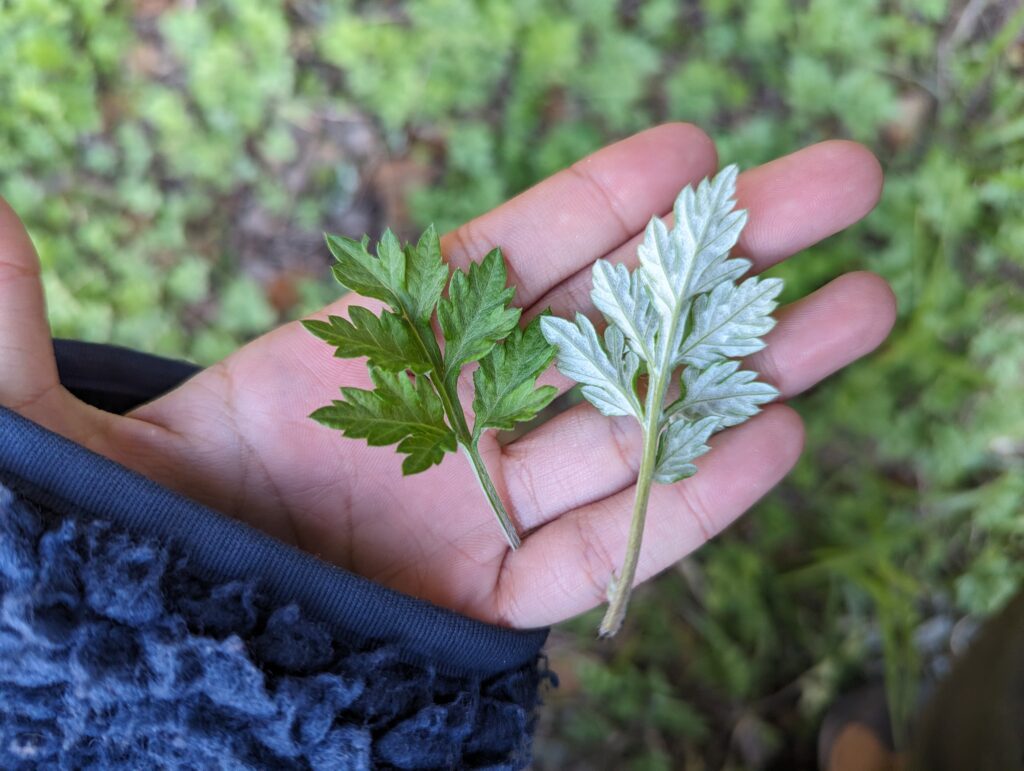
▲ Correct: The back is white and fuzzy.
1. Risk of Deadly Poison (Monkshood)
In early spring, young Yomogi sprouts look similar to Wolfsbane/Monkshood (Torikabuto), which is deadly poisonous. Torikabuto leaves are green and glossy on the back, and do not smell like herbs. If you are not 100% sure, DO NOT pick it.
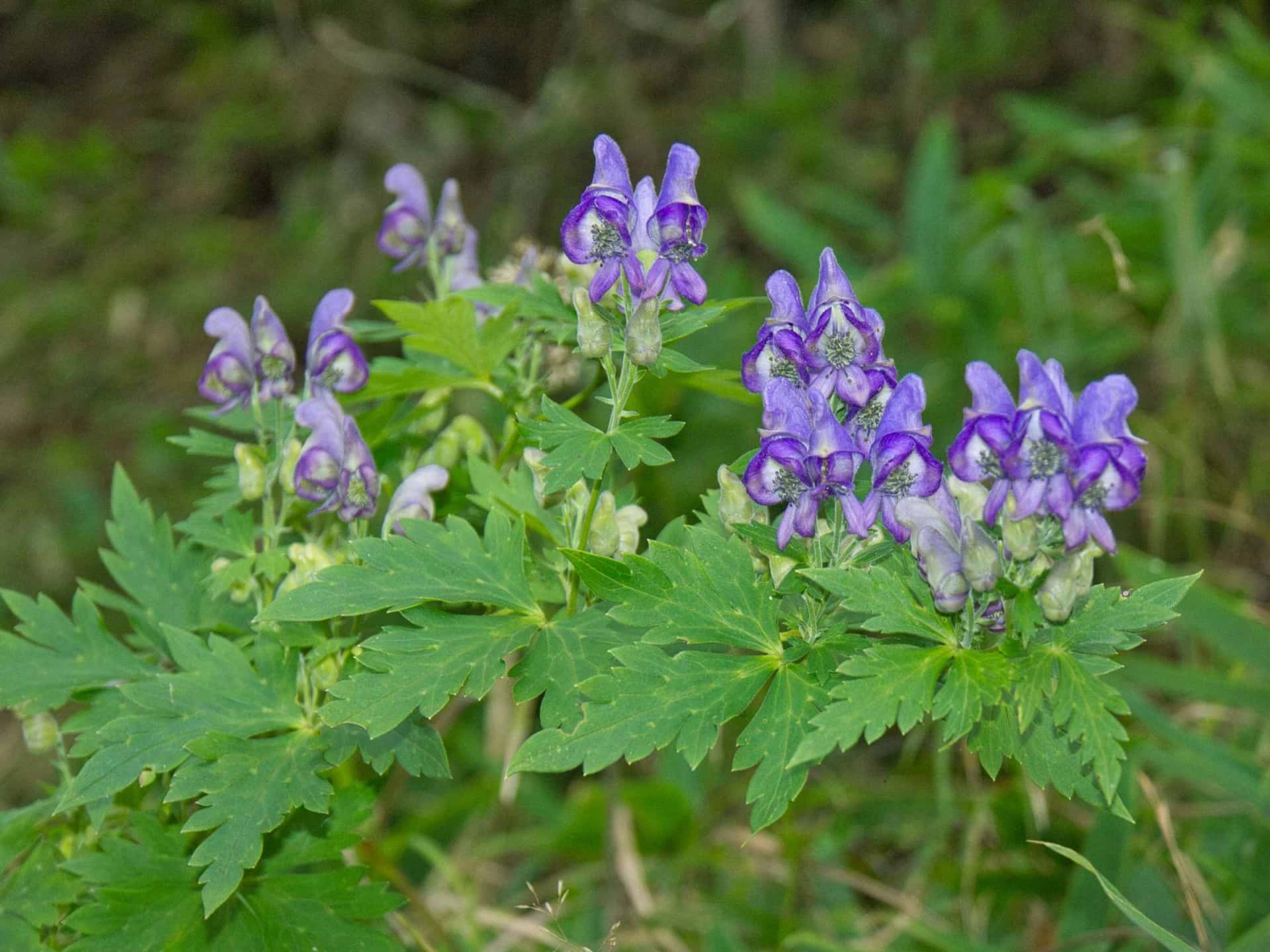
▲ [DANGER] Monkshood (Glossy leaves, deep cuts)
2. Allergies & Pregnancy
Yomogi belongs to the Asteraceae family (like Ragweed/Chrysanthemum). If you have allergies to these plants, avoid eating or bathing in it.
Pregnant women should avoid consuming large amounts of concentrated extracts (due to the component Thujone), though normal food consumption is generally considered safe.
[Eat] Enjoy the Taste of Spring
Traditional Recipes
① Crispy Yomogi Tempura
What is Tempura? It is a classic Japanese dish where ingredients are dipped in a light batter (flour and cold water) and deep-fried.
Use the soft new sprouts of spring. Frying removes bitterness and improves absorption of Beta-carotene.
1. Dip in Batter
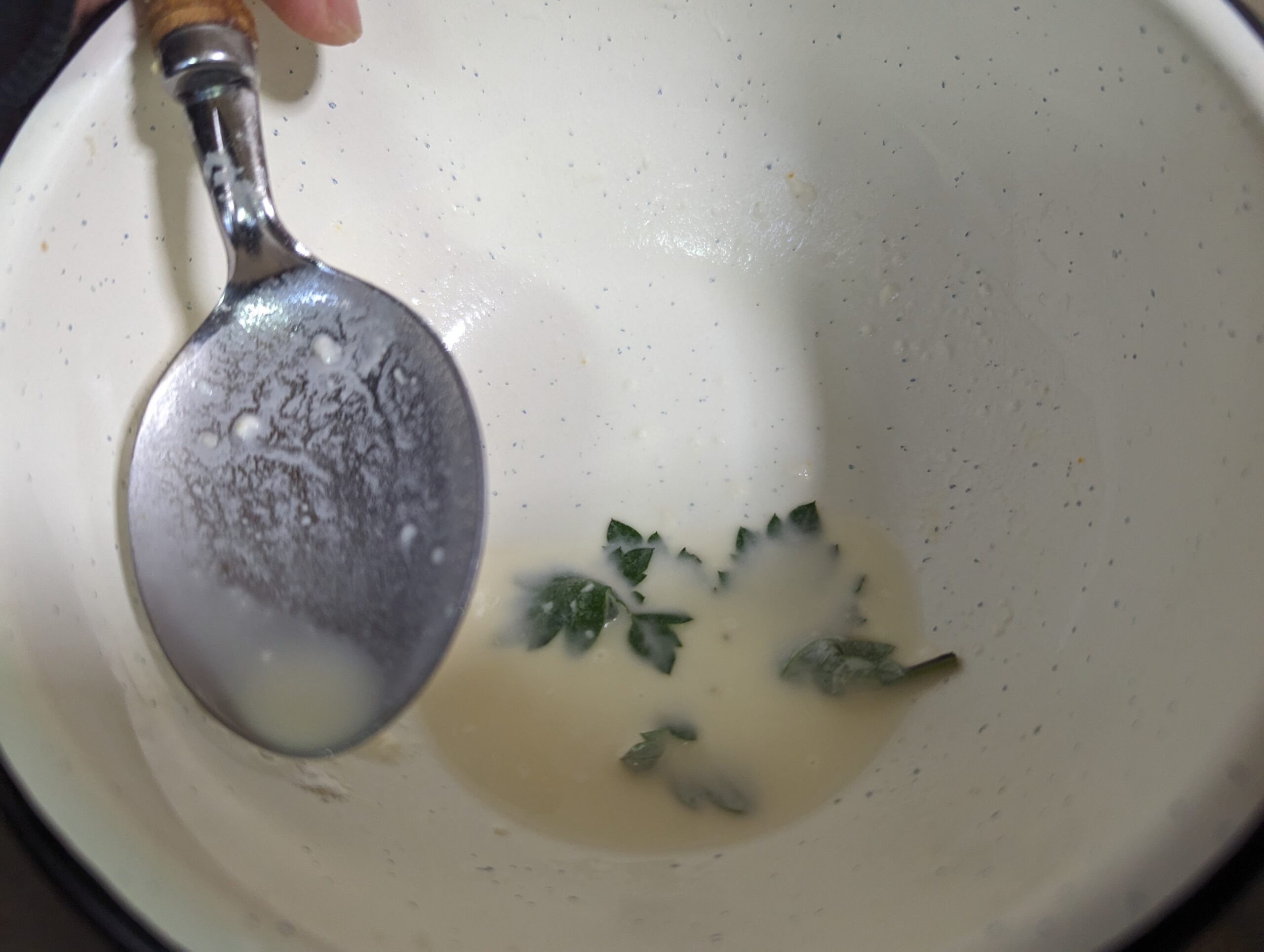
Wash and dry the sprouts. Lightly coat them in Tempura batter.
2. Deep Fry
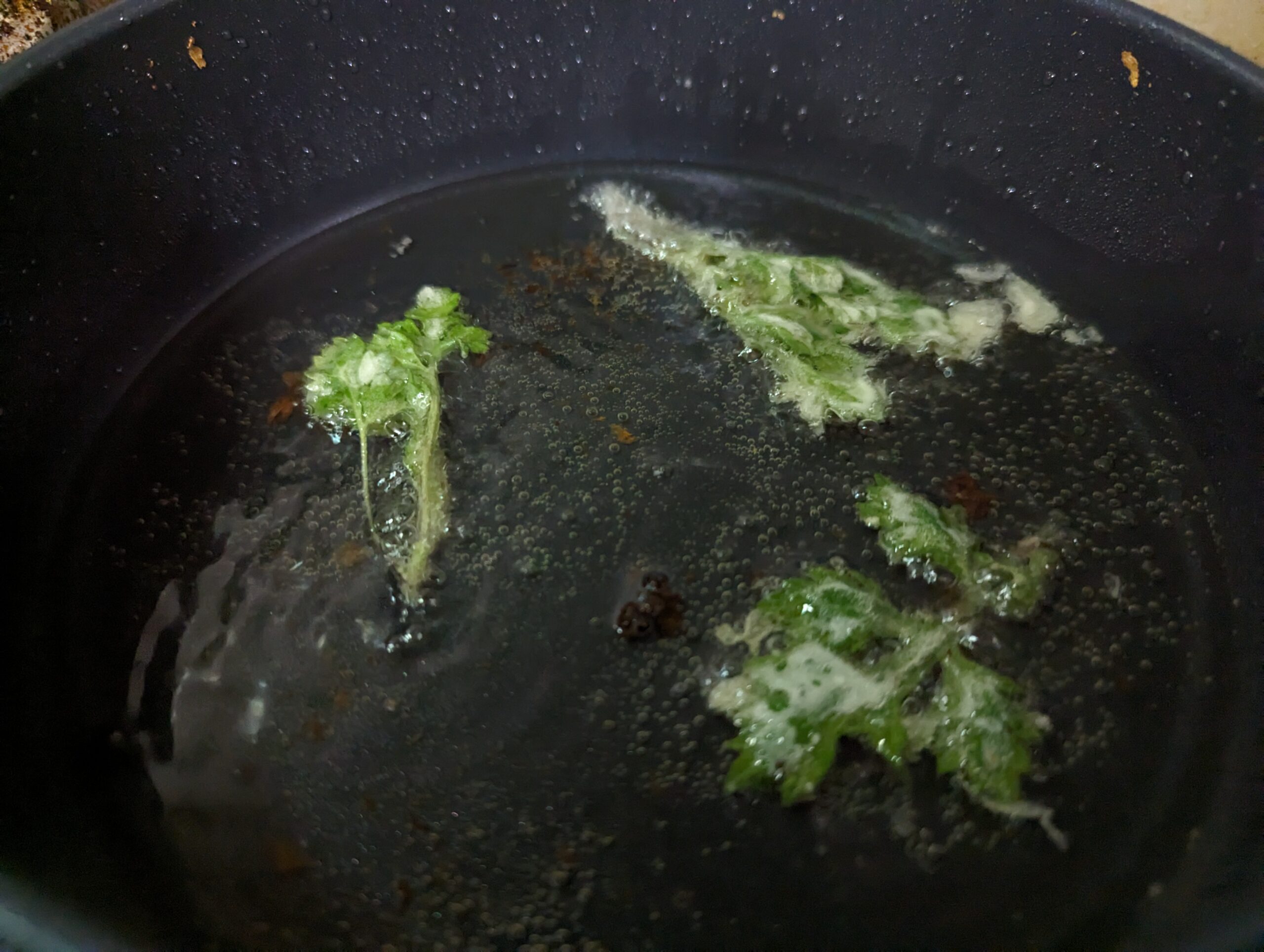
Fry in oil at 170-180°C until crispy and light.
💡 Recommendation
While salt is great, how about trying a special Japanese outdoor spice?
キャンプ飯が劇的に変わる!
3大アウトドアスパイス
コンプリートリスト
焼くだけの肉料理がお店の味に。キャンパーなら必ず持っておきたい「3大スパイス(黒瀬・ふ~塩・ほりにし)」のラインナップをまとめました。
黒瀬スパイス(かしわ屋くろせ)
元祖・肉屋のスパイス。ペッパーが効いたパンチのある味わいは、ステーキとの相性が抜群です。
黒瀬スパイス 110g / 500g

ミラクルすぱいす ふ~塩
熊本発の奇跡のスパイス。和食、洋食、中華となんでもござれ。個人的にスパイスの中で一番のお気に入りです!
ふ~塩(旨ミックス・ゆず胡椒ミックス)

当店価格より高い商品は「転売品」です。フリマサイトなど当店の把握していないネットショップでの購入品は、保管状況の保障ができないため、当店では保障をいたしかねます。
※「ミラクルすぱいす ふ~塩×スザ飯 ゆず胡椒ミックス」などは、以下の公式販売元より正規価格でご購入いただけます。
(ゆず胡椒ミックスはこちら)
アウトドアスパイス ほりにし
今やキャンプスパイスの代名詞。和歌山のアウトドアショップ「Orange」が生んだ傑作です。
ほりにし(白・黒・赤・金)

▼ With other wild mountain vegetables
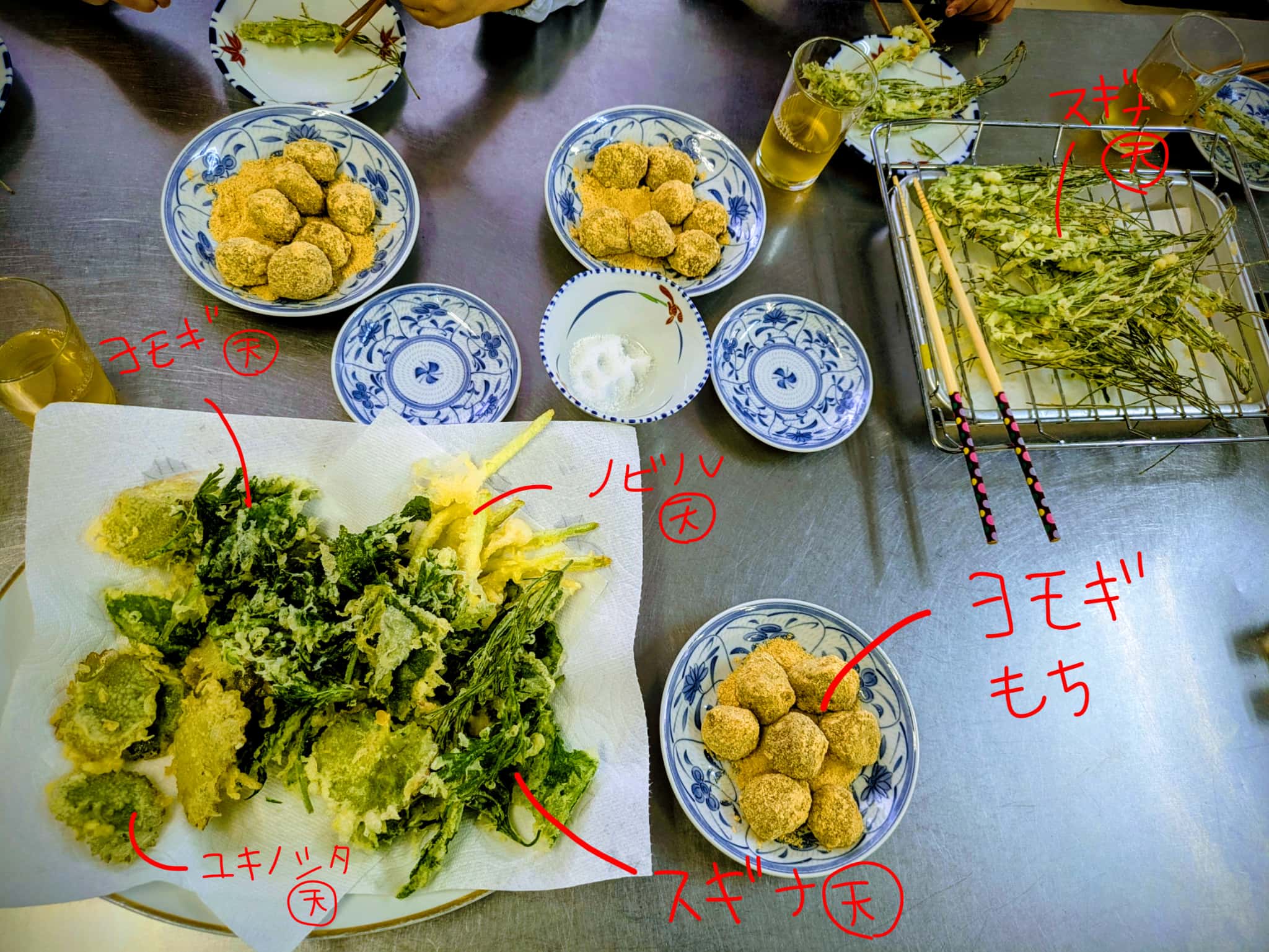
② Handmade “Kusa Dango”
What is Kusa Dango? These are chewy Japanese rice dumplings mixed with Mugwort, giving them a beautiful green color and herbal aroma. A traditional spring treat.
Ingredients: Dango flour (Shiratamako or Joshinko), Yomogi, Pinch of salt, Water.
1. Boil & Cool (Important)
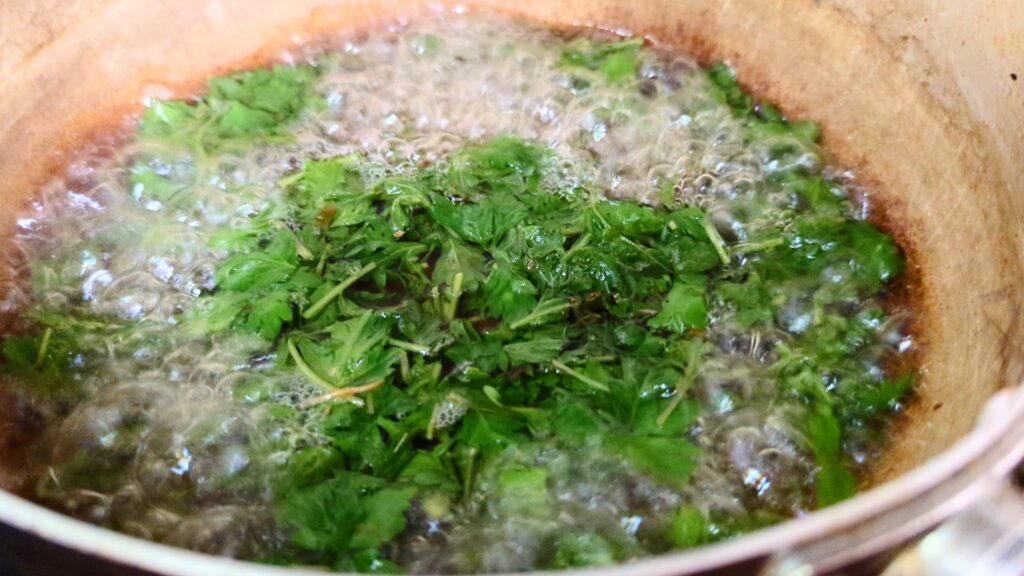
Boil leaves in salted water for 1-2 mins, then immediately soak in cold water. This keeps the bright green color.
2. Make a Paste

Squeeze out water tightly. Finely chop or grind in a mortar until fibers are broken down.
3. Mix & Boil
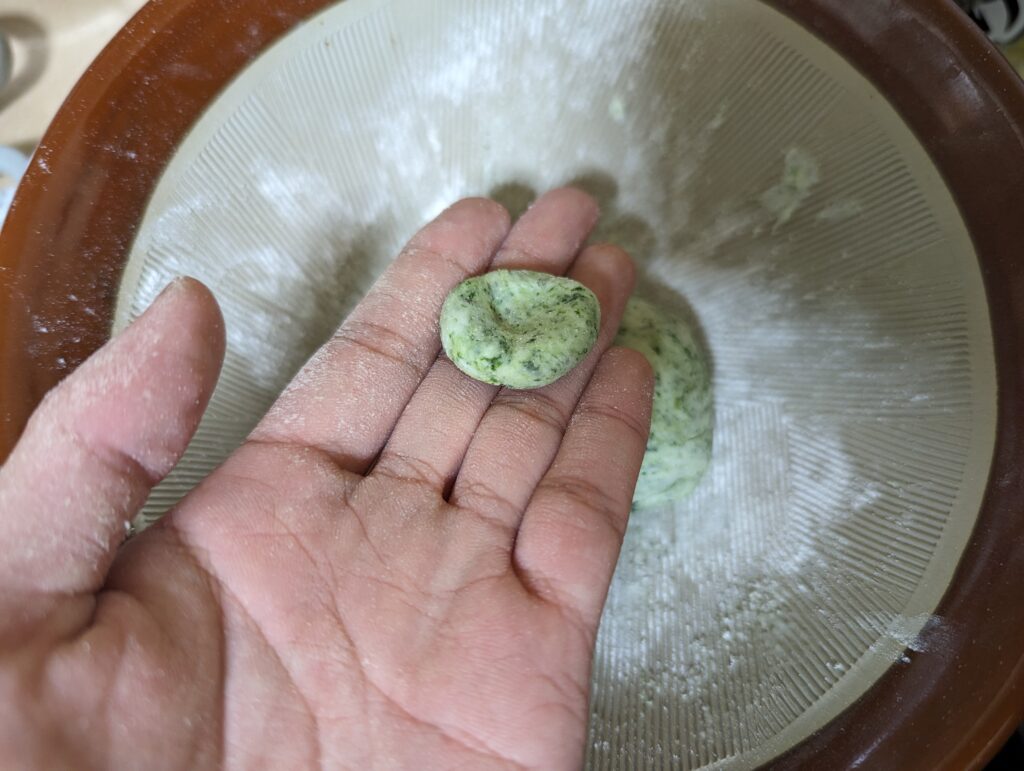
Mix paste with flour and water, roll into balls, and boil. Once they float, boil for another minute.
[Heal] Tea, Bath, and Tincture
🍵 Yomogi Tea (Caffeine-free)
Dried leaves can be used for tea. Since it contains no caffeine, it’s suitable for pregnant women (in moderation) and children. It is also a good source of iron.
1. Roast
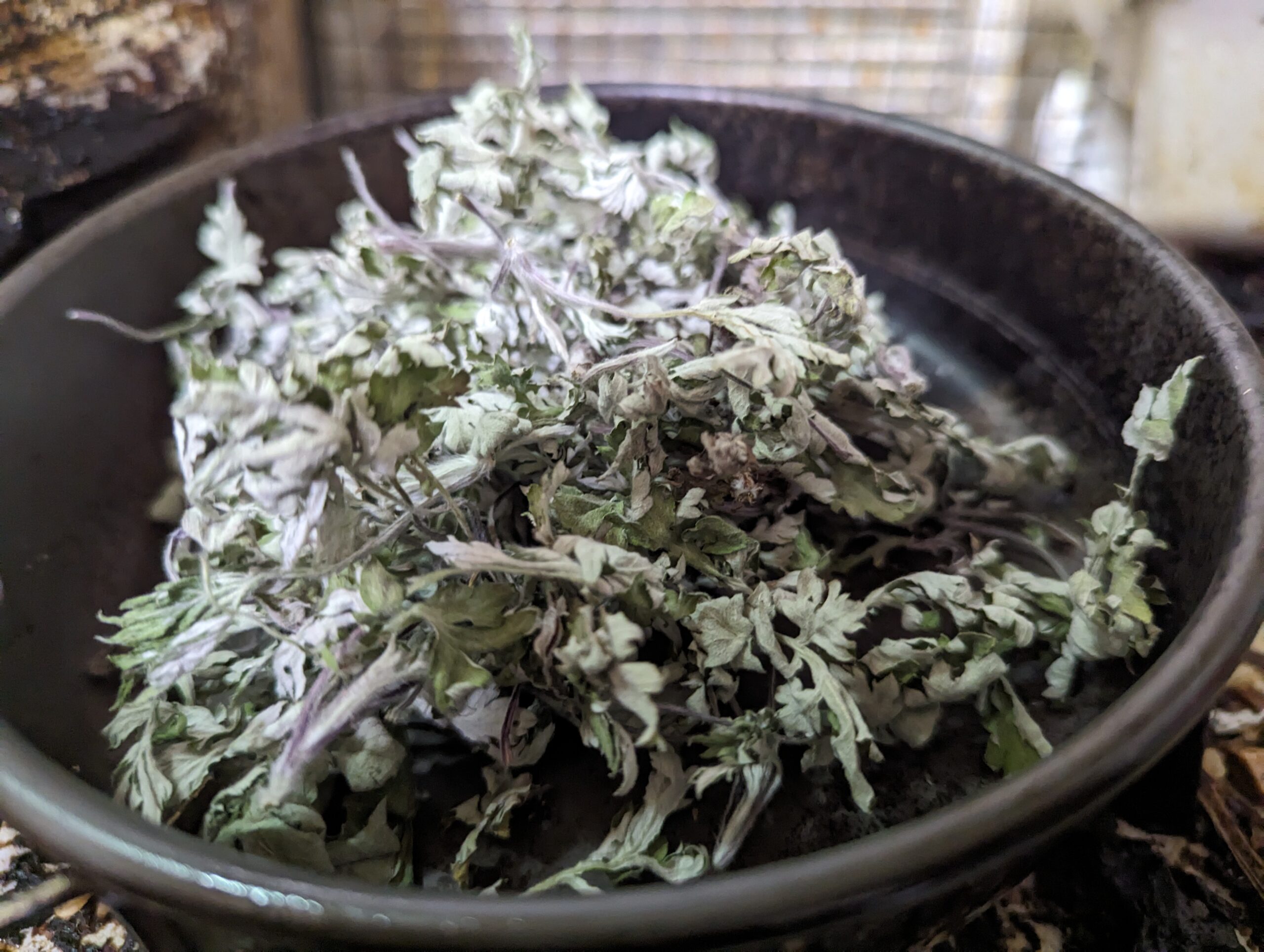
After drying the leaves in the shade, lightly roast them in a pan to enhance the aroma.
2. Steep
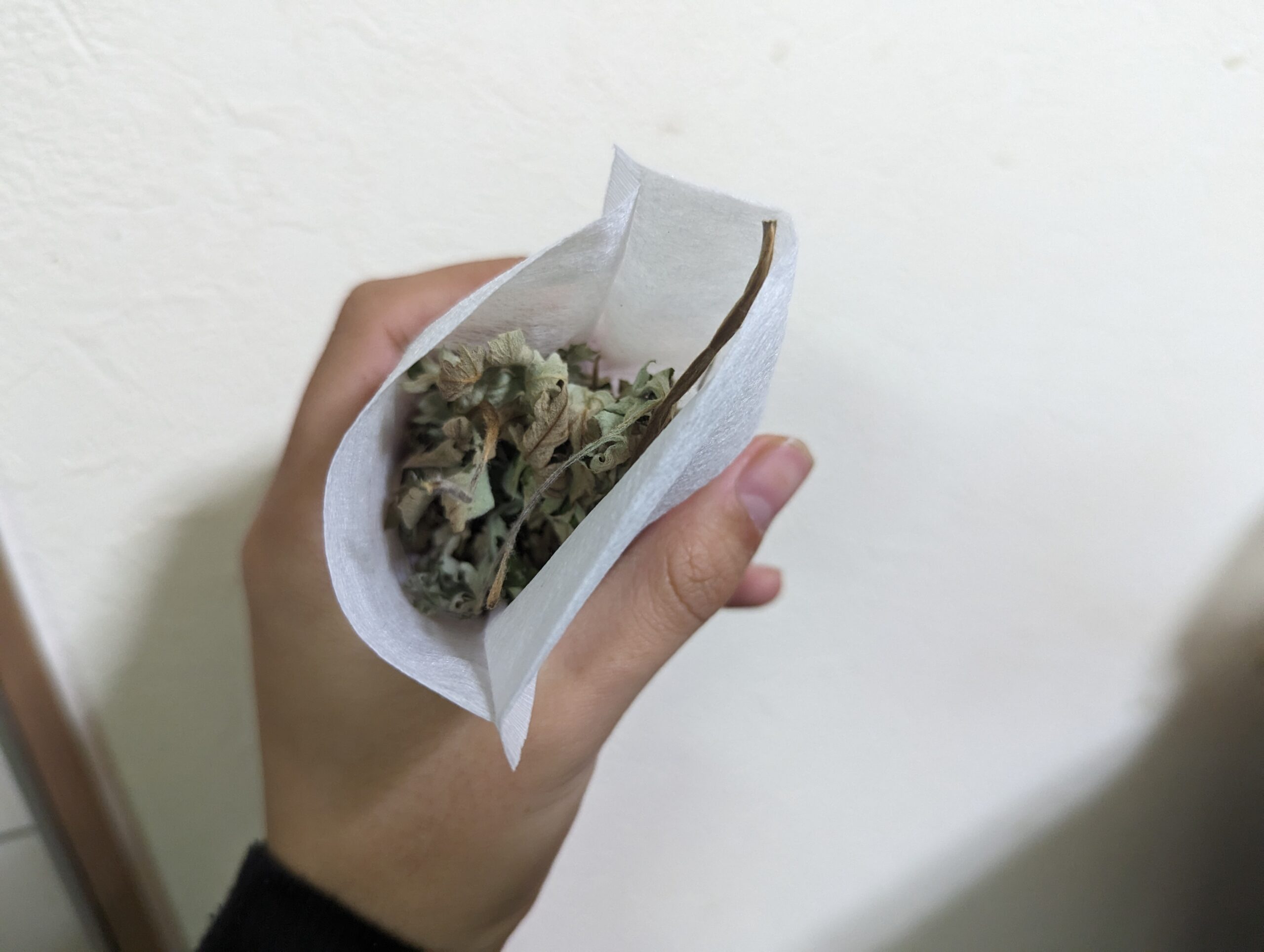
Put leaves in a tea bag and pour hot water. Wait a few minutes and enjoy.
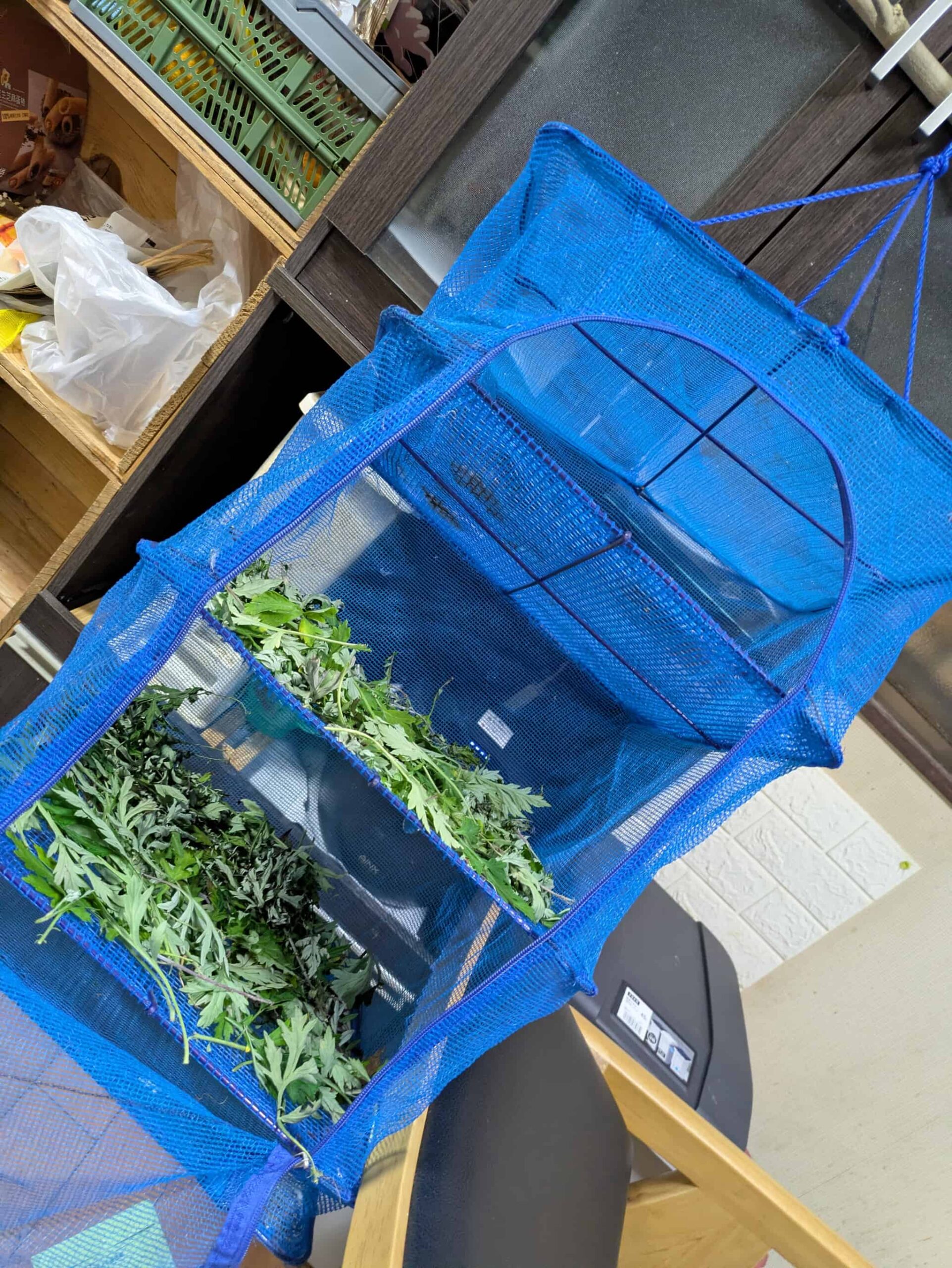
▼ A drying net is very useful!
♨️ Yomogi Bath (Onsen Style)
To maximize the warming effect of “Cineole,” put Yomogi in your bath. Boil dried or fresh leaves and add the broth (and leaves in a bag) to your bathtub. It is said to help with back acne and skin irritation due to its antibacterial properties.
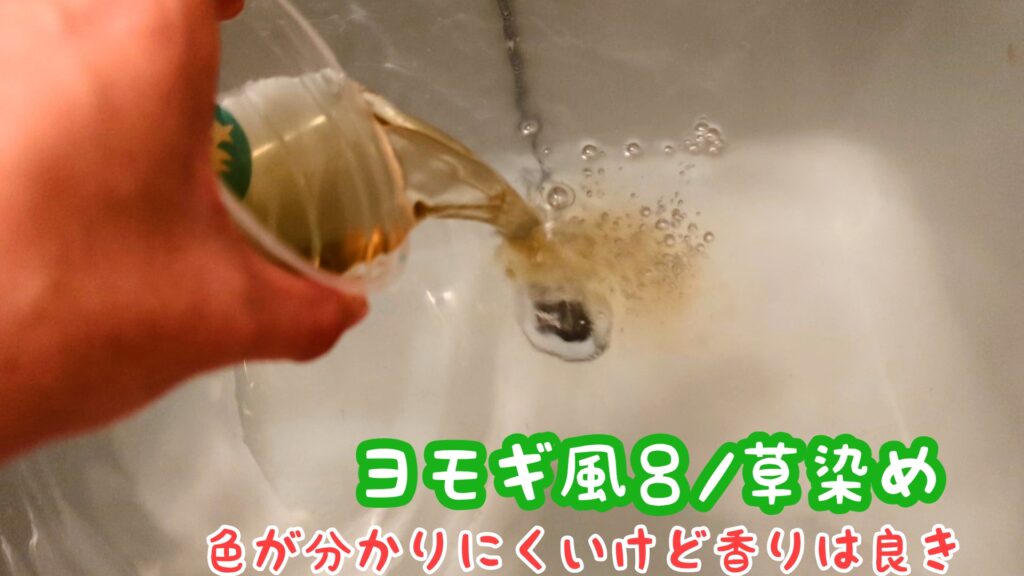
✨ Advanced: Yomogi Tincture
A “Tincture” is an alcohol extract. It can be used as an anti-itch remedy for bug bites or diluted as a skin toner.
- Pack washed and dried Yomogi into a glass jar.
- Pour White Liquor or Vodka (35% alcohol or higher) until leaves are covered.
- Store in a cool, dark place for 1-3 months.
*Always perform a patch test before using on your skin.
Enjoy Nature at Your Feet
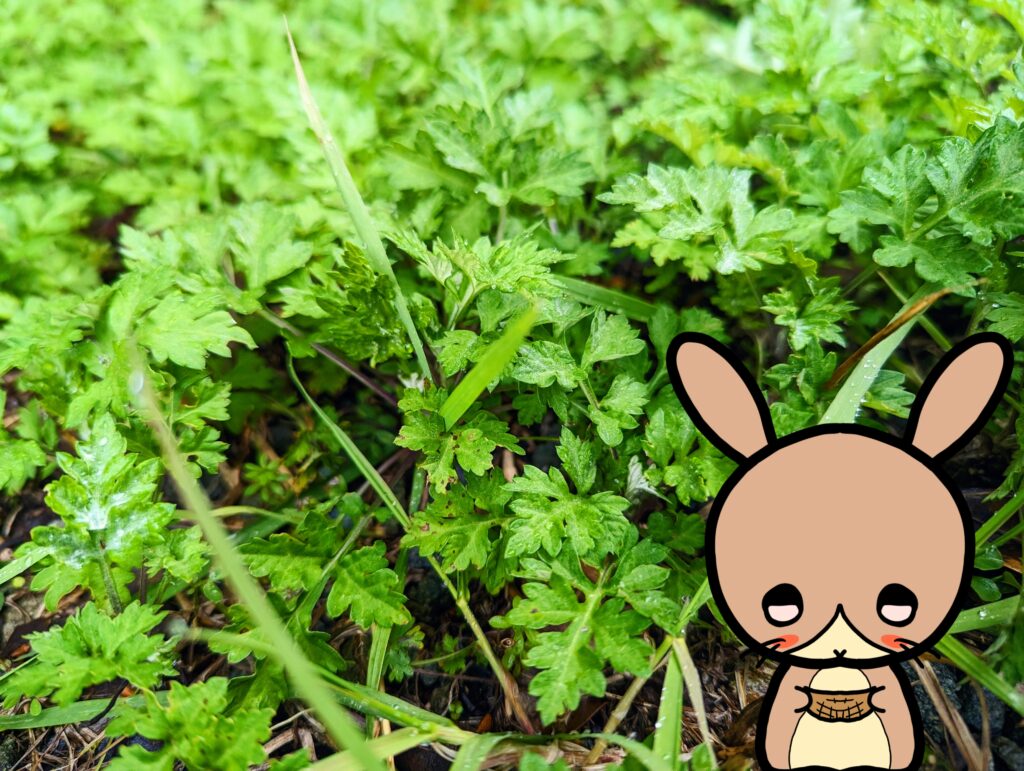
Yomogi might look like just a weed, but with the right knowledge, it becomes a powerful ally for your health.
Let’s enjoy the blessings of Japanese nature safely.
Why not go on a little “Treasure Hunt” at a nearby riverbank?
I’m counting your posts on 𝕏 (Twitter)!
Let’s find wild treats together!
【References / Sources】
- MEXT Food Composition Database
- NIBIOHN “Health Food” Safety Information
- Ministry of Health, Labour and Welfare Natural Toxin Risk Profiles