Hello! I’m Zackey Saurus, an outdoor magazine editor and camping enthusiast.
The air at the campsite is getting crisp and cold, and the warmth of the bonfire soaks right into my bones. Are you enjoying the flavors of autumn?
Actually, the other day, a campsite owner I know gave me a basket full of persimmons, saying, “My garden is overflowing with persimmons! Please take them all!”
“Lucky! Dessert secured!” I thought, and immediately took a big bite… but the next moment, disaster struck my mouth.
The owner laughed, “Haha, you can’t eat those without drying them first!”
That’s when it hit me. “Wait, isn’t this process similar to maintaining camping gear? Taking time and care to create something wonderful?”
So today, I’d like to introduce “How to make Homemade Hoshigaki (Dried Persimmons)” to all you campers who admire the slow life. It’s the ultimate slow food experience you can do right on your balcony.
Why Make Hoshigaki Now?
You might think, “Why not just buy them at the supermarket?” But we are campers, right?
Pitching a tent, building a fire, cooking slowly… we know that the “process of enjoying inconvenience” is the ultimate luxury. Making Hoshigaki is exactly the same.
- Quiet time peeling fruit while feeling the autumn breeze.
- Watching them shrink and darken day by day.
- The emotion when you finally taste that rich, dense sweetness.
This is a respectable outdoor activity.
“I don’t have a persimmon tree!” Where to get them?
If you live outside of Japan, look for persimmons labeled as “Hachiya” (acorn-shaped). These are astringent and perfect for drying. The tomato-shaped ones are likely “Fuyu” (sweet) and are better eaten fresh.
Where to find Shibugaki (Astringent Persimmons):
In Japan, “Michi-no-Eki” (Roadside Stations) are the best place! Farmers often sell branches of them very cheaply in autumn. Online marketplaces or local community apps are also great places to check.
Gear Checklist: Just like preparing for Camp!
You don’t need special tools. Your usual camping gear will work perfectly.
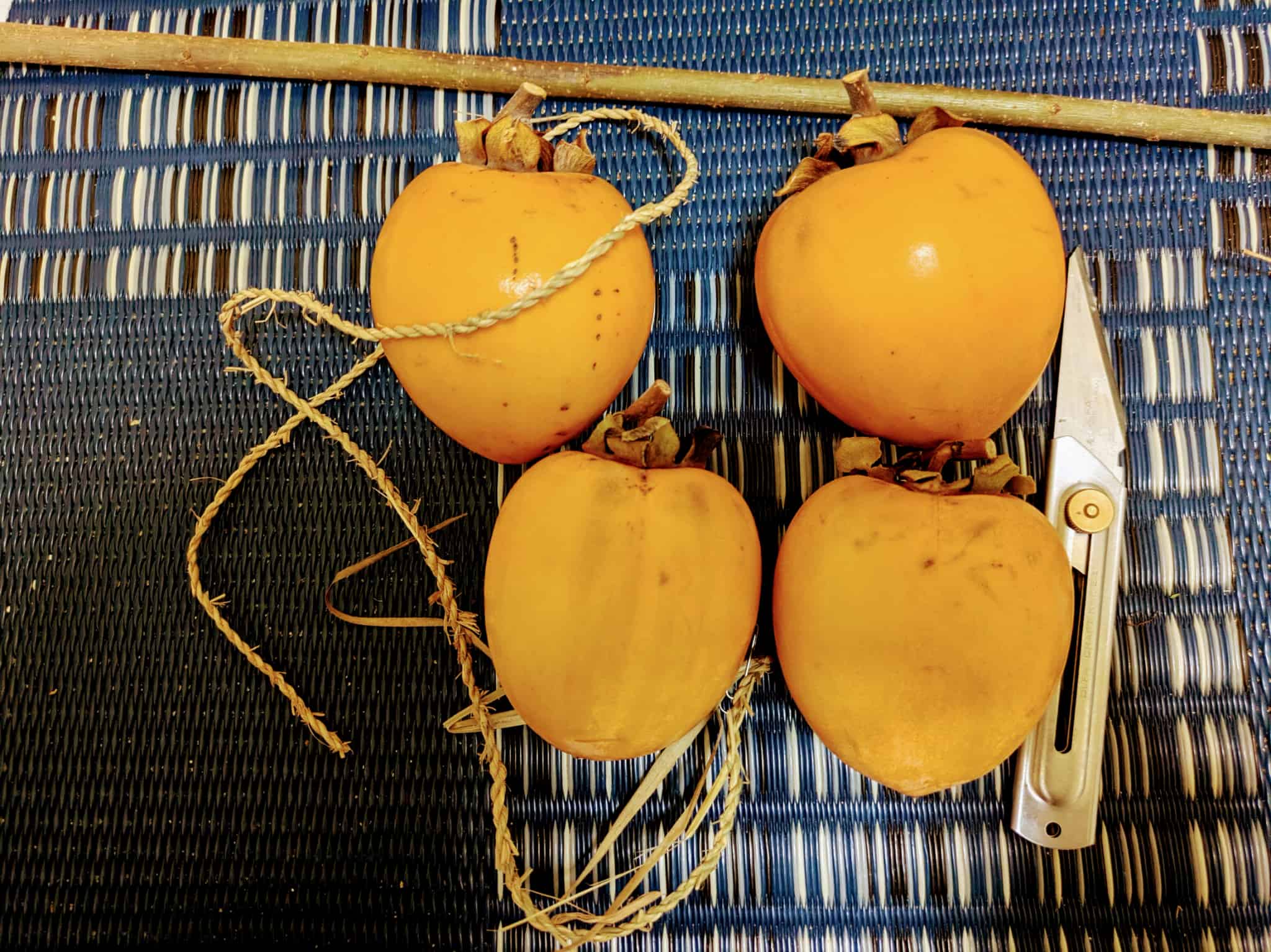
▲ The tools I prepared. Simple is best!
Sharp Knife
An outdoor knife like an Opinel is cool, but a peeler is handy since there are many to peel. Rhythm is key!
String / Rope
Regular vinyl string is fine, but using Hemp twine adds a traditional Japanese vibe.
If the stem breaks, a camper’s hack is to clip it with a clothespin and hang it on a hanger!
The Savior: Mesh Net
If the stem snaps off, an “Orange Net” is perfect. Just put the persimmon inside. Zero risk of falling!
Pot for Boiling Water
Used for sterilization to prevent mold. Using a large pot makes the process faster.
Hanger for Drying
A pinch hanger (laundry hanger) is the strongest ally if you don’t have a beam to tie ropes to.
Iron Wall Defense! Drying Net
Worried about birds or bugs? A camping dry net allows you to leave them on the balcony with peace of mind.
[Practice] 5 Steps to Making Hoshigaki without Failure
Here are the specific steps. The key is “Don’t rush, be gentle, and consult the weather.” Treat it like setting up your campsite while reading the wind.
STEP 1: Peel leaving the Stem
The T-shaped stem at the top is the “anchor” for tying the string. Be careful not to cut it off! Peel the skin cleanly.
STEP 2: Tie and Pair
Tie the string to the stems, making pairs (two persimmons per string). This makes them easy to hang over a laundry pole.
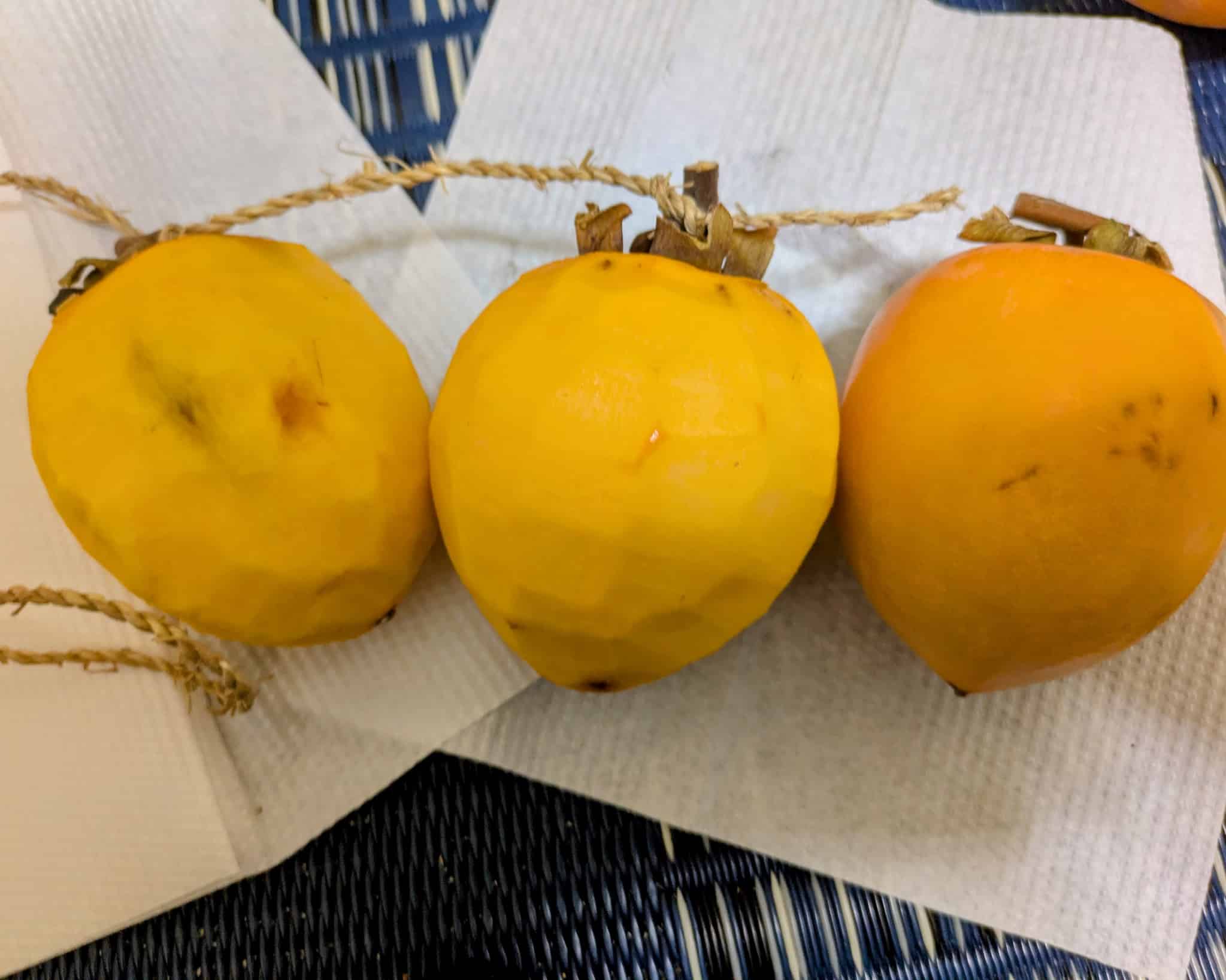
▲ Peeled and tied. Since I only had a few this time, just make sure they don’t touch each other.
STEP 3: Hot Water Dive (Sterilization)
This is the most important point! Dip the persimmons in boiling water for 5 to 10 seconds. This sterilizes the surface and prevents mold.
STEP 4: Hang in a Breezy Spot
Hang them under the eaves or on a balcony. The ideal spot has “No rain, some sun, and good airflow.”
Keep social distance between the persimmons so they don’t touch.
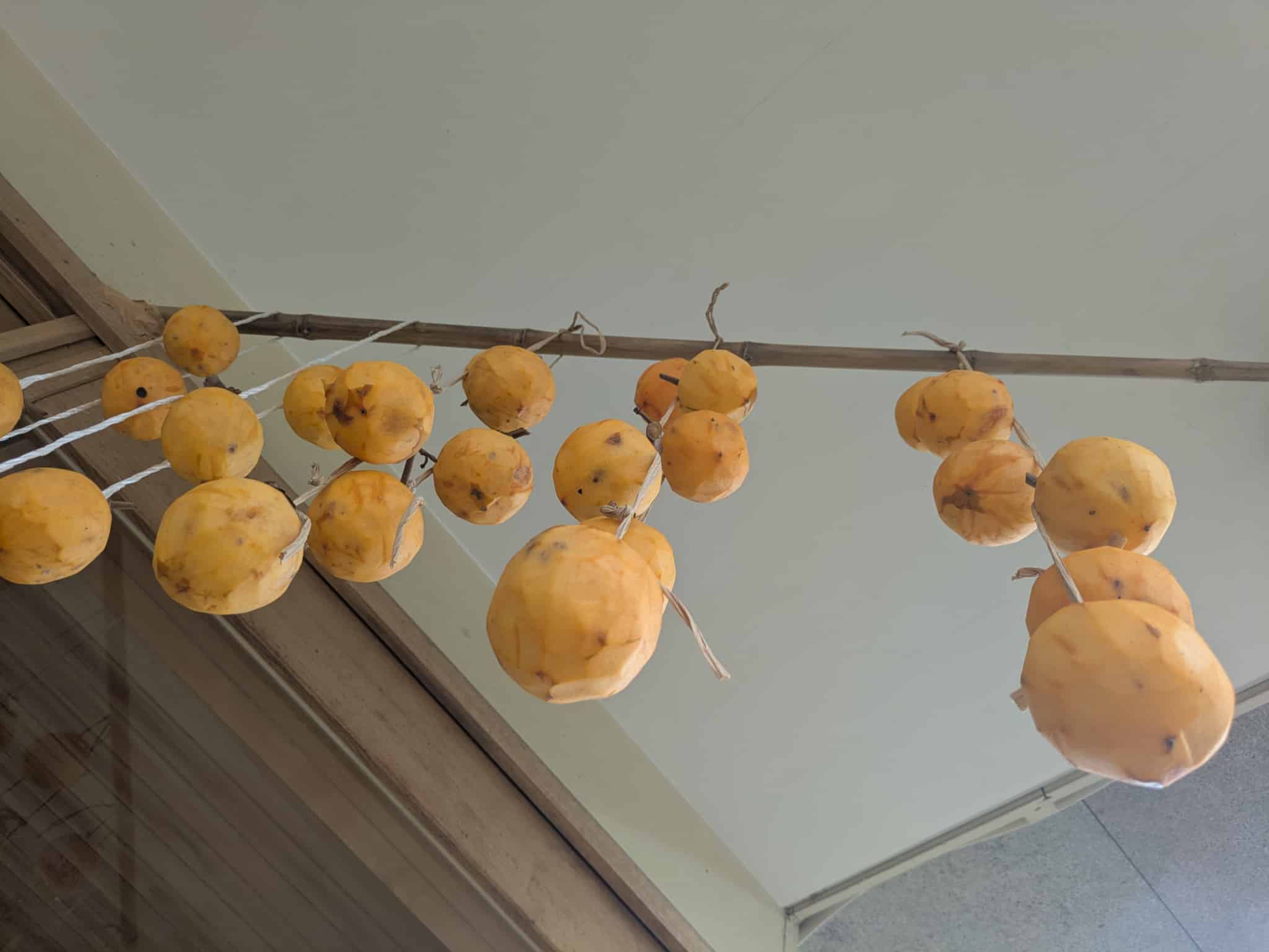
▲ Hanging in the breeze. A beautiful autumn scene, isn’t it?
STEP 5: The Magic Touch “Massage”
After about a week, when the surface feels dry and a skin has formed, gently massage the fruit with your fingers. This breaks down the fibers and spreads the sweetness evenly inside.
Chant “Become delicious!” and massage them every few days. In 2-3 weeks, your beautiful amber Hoshigaki will be ready!
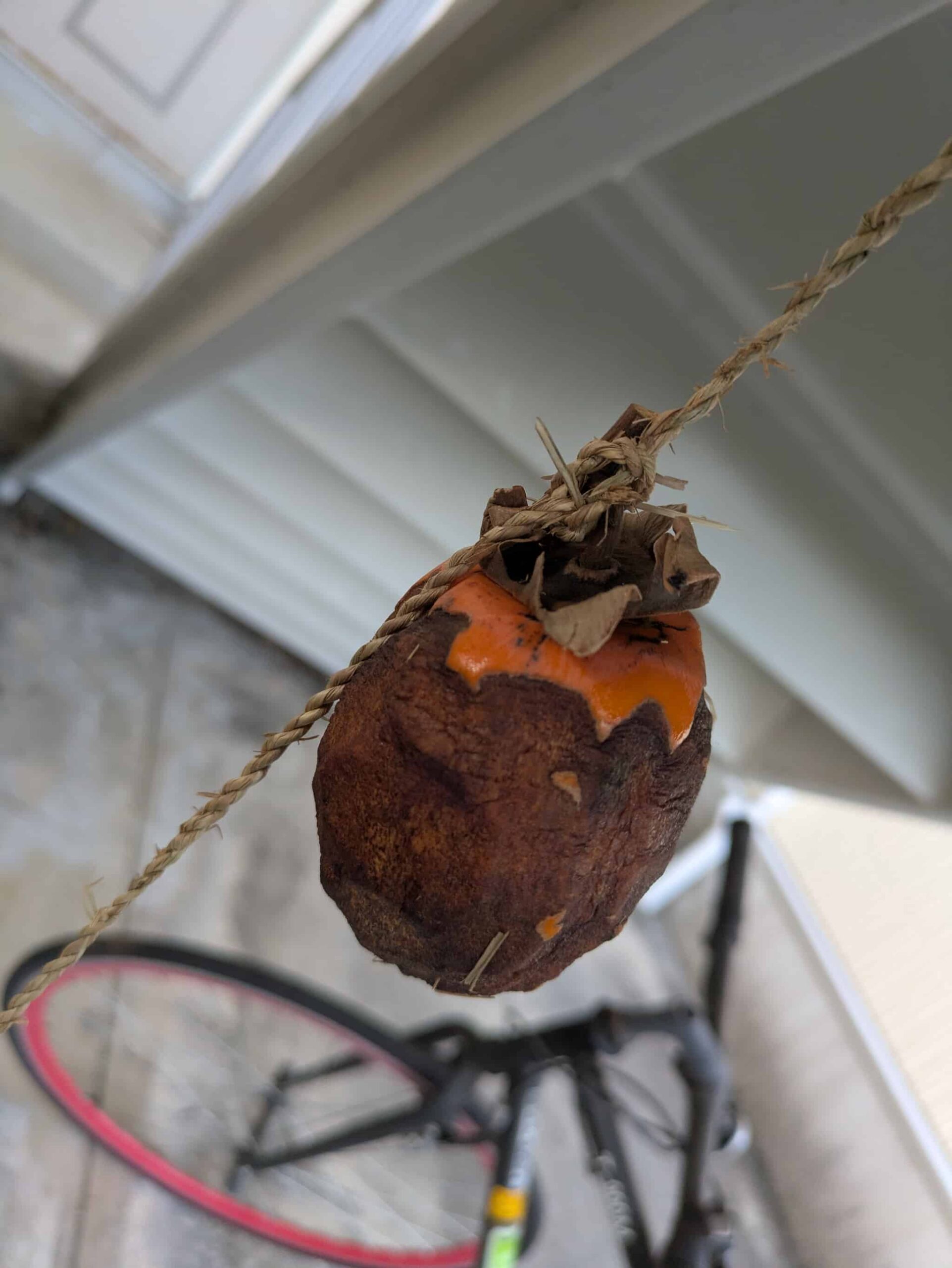
▲ About 5 days in. They are losing moisture and shrinking a bit.
Camp Food Arrangement: “Persimmon Cheese Sandwich”
Eating them plain is great, but why not try a grown-up snack perfect for camping nights?
🥃 Hoshigaki & Cream Cheese Mille-feuille
A dangerous combination with Whiskey or Hot Wine.
- Remove the stem and slice the Hoshigaki open. Remove seeds if any.
- Place a generous amount of cream cheese inside.
- Top with crushed walnuts (roasted is better!).
- Close it up, wrap it in plastic wrap, and chill in a cooler box to set the shape.
- Slice into 1cm pieces for a beautiful hors d’oeuvre!
Hoshigaki Q&A: Learn Japanese Tradition
Historical records from the 10th century mention “Dried Persimmons” as sweets for festivals. Since sugar was very precious back then, Hoshigaki was treasured as a “Natural Sweetener.” It is a deeply rooted part of Japanese history.
This is called “Kakisimo” (Persimmon Frost). As the fruit dries, the glucose surfaces and crystallizes. It is NOT mold, so please eat it with confidence! In fact, the more white powder, the sweeter it is.
The bitterness comes from “Tannin.” By drying it, the tannin changes chemically so it doesn’t dissolve in your saliva. The bitterness is technically still there, but your tongue can no longer feel it, leaving only the rich sweetness.
Summary: Enjoy the Slow Life
The time it takes for a bright orange persimmon to shrink in the cold wind and become covered in white powder… it’s like tasting the changing of the seasons itself.
Turning something inedible into a premium sweet using only the power of nature (Sun and Wind). Isn’t that the ultimate outdoor activity?
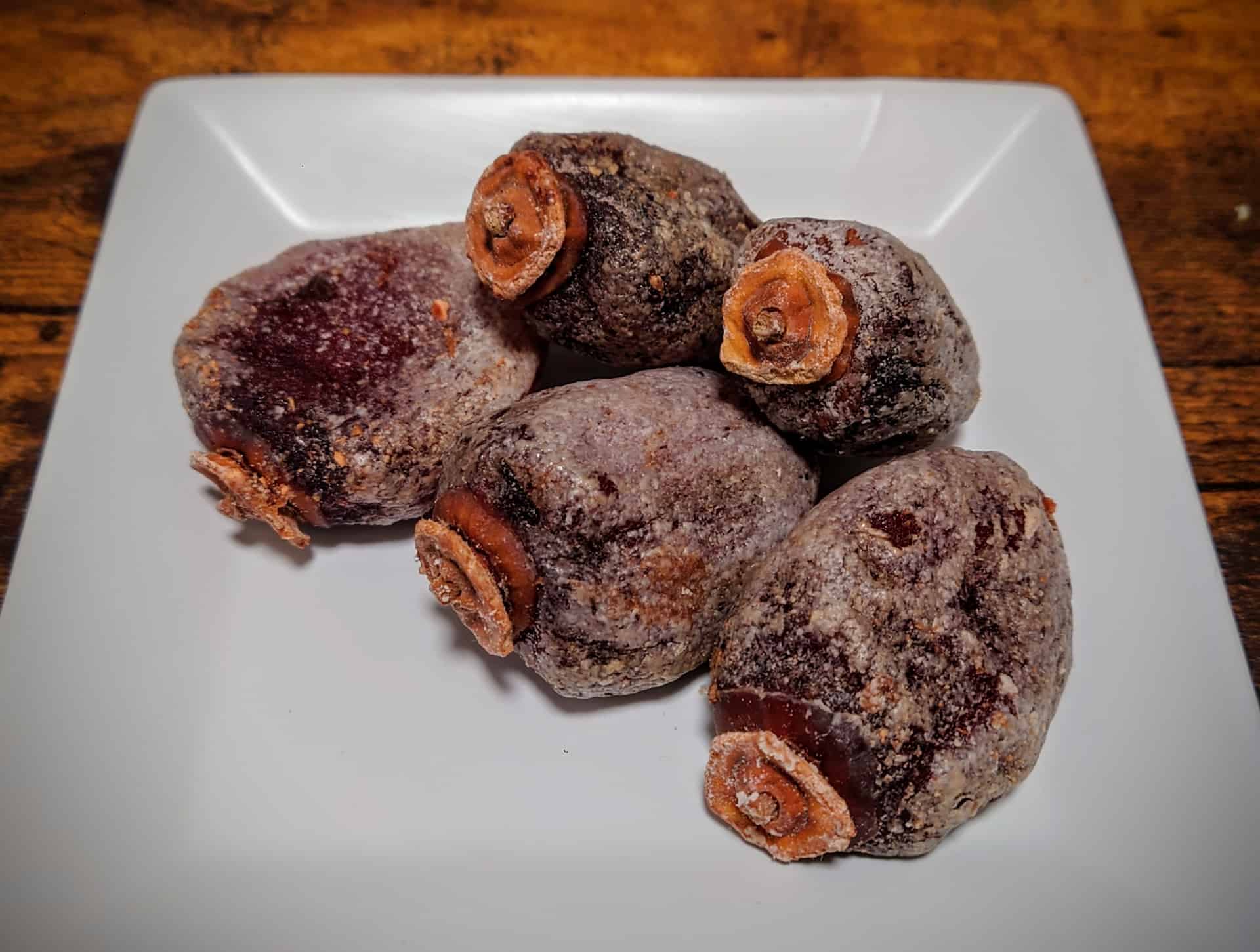
▲ This is the finished Hoshigaki! A gem of Japanese autumn.
I’m not sure if it will suit your palate, but I hope you will give this traditional taste of Japan a try!
Let’s enjoy slow outdoor life!
Text & Photos: Camping Editor Zackey Saurus